field.tours

IVAR Studios

In development

field.tours is the AI-powered engine that lays the foundation for everything we build in interactive 3D. It takes a scanned place, streams it into the browser, tags what matters in the 3D environment and lays a story through it, with an AI host beside you that answers from the real material behind the tour. Three doors are open today: the Anundshög runestone, Delsbogården at Skansen and the merchant ship Baron Anders von Höpken from Sjöhistoriska museet, put back to sea. A fourth, the glacier Sálajiegna, runs as a custom story on exped.earth. We are building the engine so that, in the end, organisations can tell their own AI-guided stories in it.

Visit field.tours →
field.tours highlight

A scan shows what a place looks like. field.tours teaches it what everything is. That semantic tagging of the 3D world is what lets an AI host point at a storehouse, fly to a rune, steer you around a ship and tell you where the facts came from.

One engine, any place

A runestone in Badelunda, a Hälsingland farm at Skansen as it stood around 1850, a merchant ship of 1759 from Sjöhistoriska museet put back to sea, a glacier front in Swedish Lapland: every field.tours story runs on the same AI-powered engine. It handles the 3D world, the camera, the story stops, the AI host, voice, two languages and VR. A story only has to bring the place and what to say about it. One tour runs in a browser, full screen on a touch display in a visitor centre and in a VR headset, with nothing to download. Visitors choose who the AI host speaks to, from school pupils to specialists.
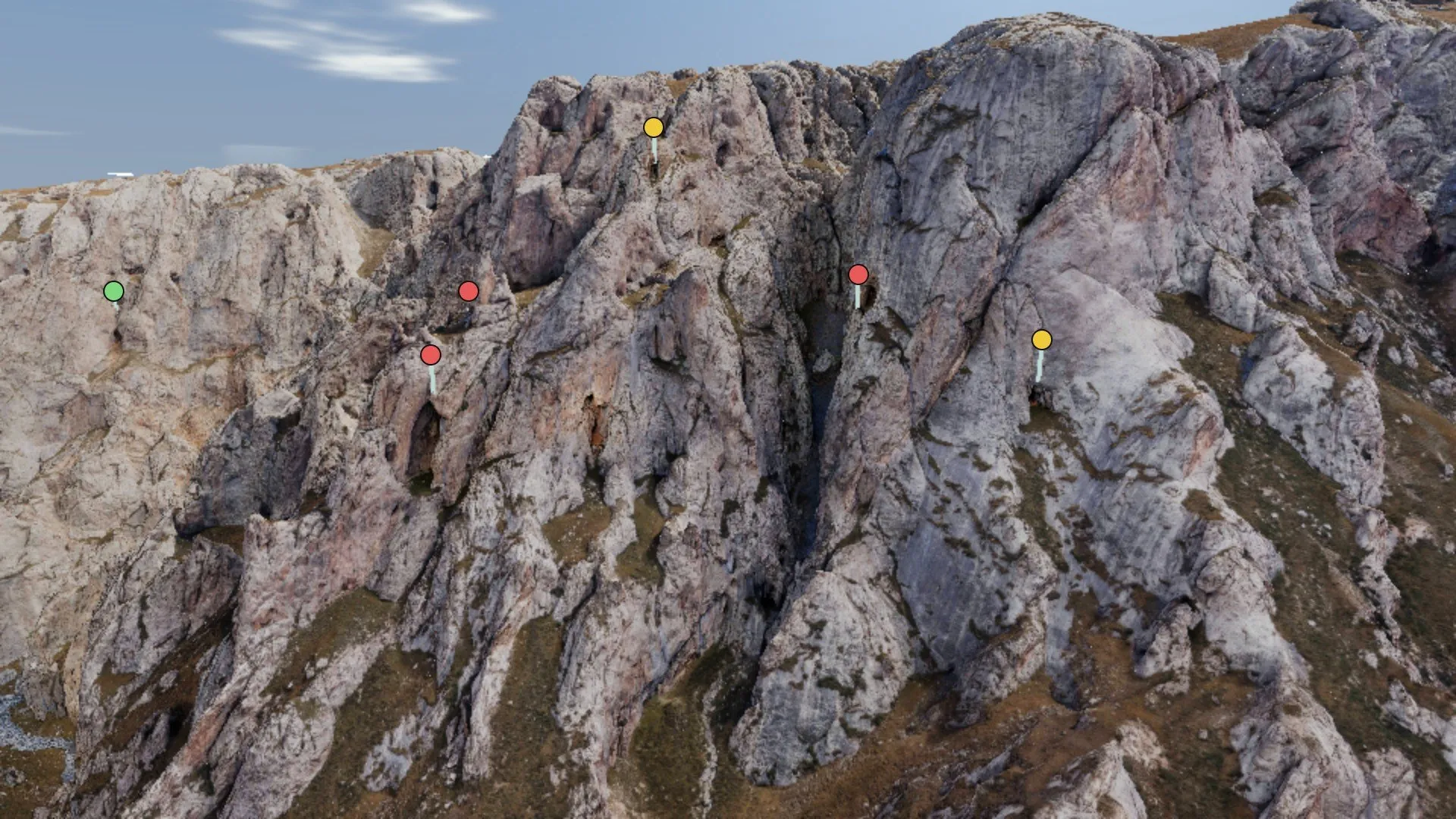
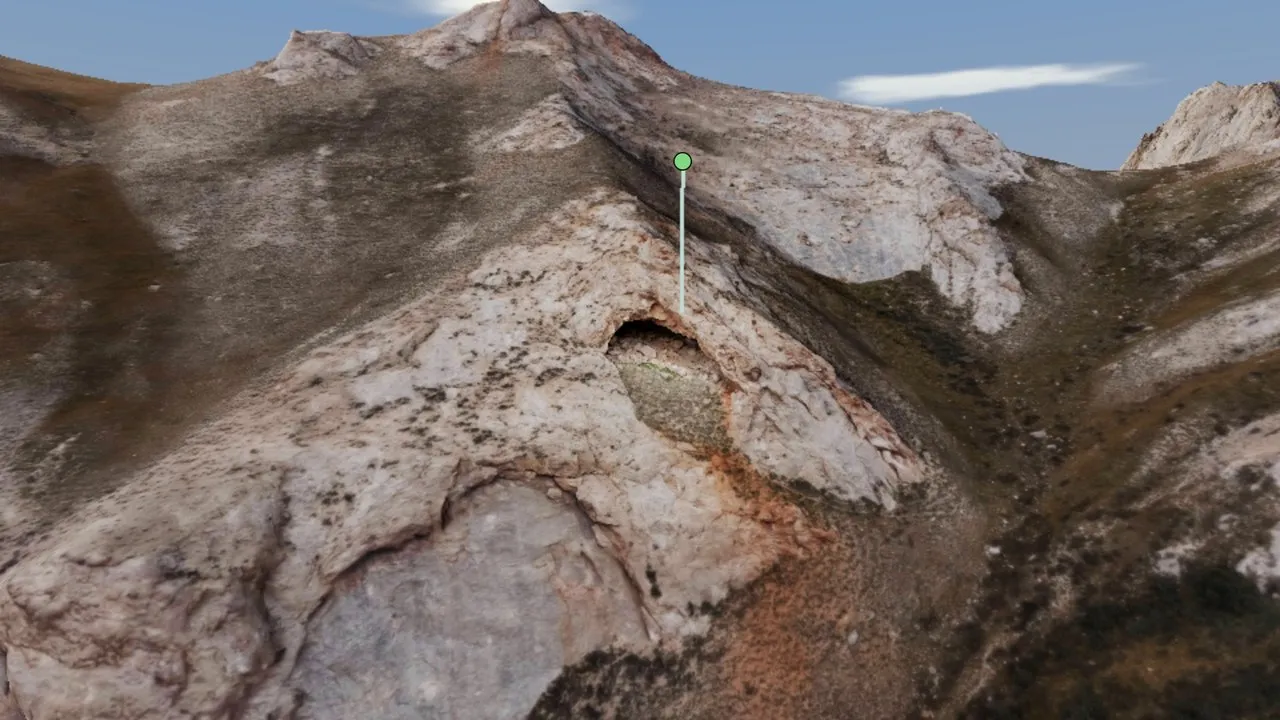
"Where is the river?" In a valley in Kyrgyzstan, ask and the host answers and takes the story there: the camera flies to the river and the next stop begins.

Semantic tagging of the 3D world

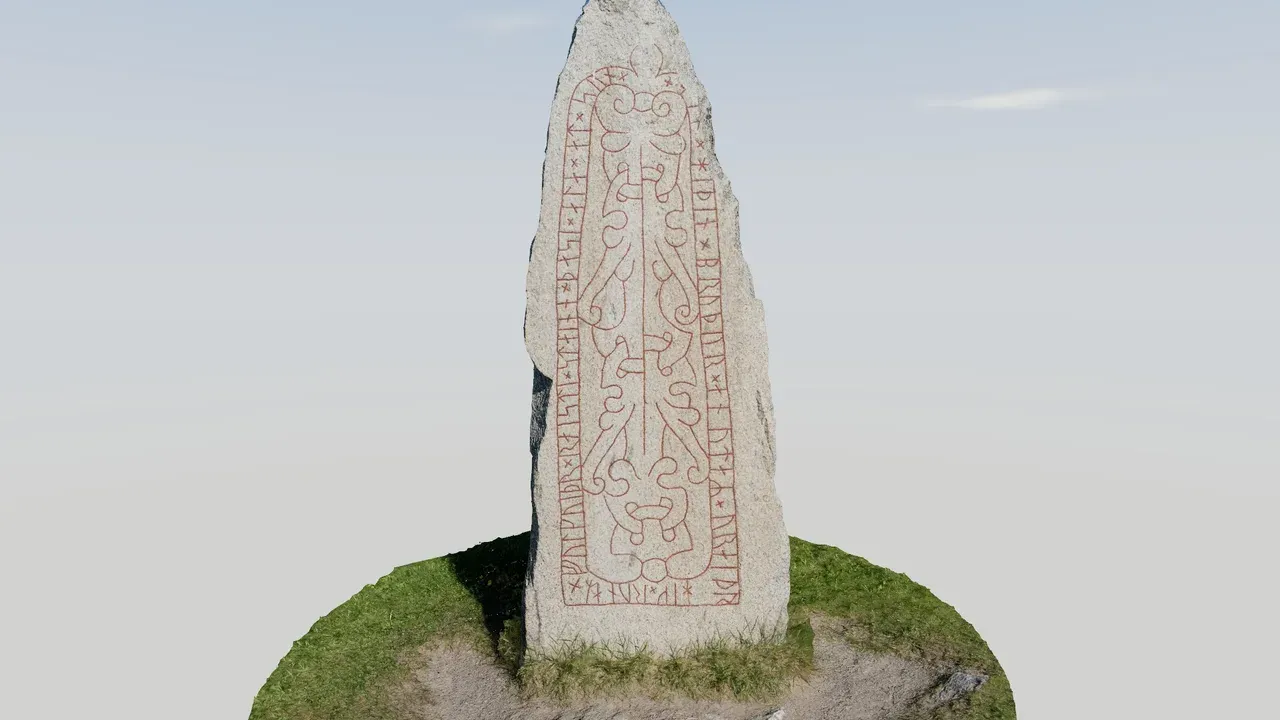
To a computer, a scan is just shapes. So we tag the important parts of the 3D environment with meaning: this word is Folkvid, who raised the stone; this one is his son Heden; this is the carver's signature; this whole field is the ornament. Each tag carries a short text and its sources, written by people who know the place. Those tags are what the AI understands the world through. Once the world knows itself, the AI host can act in it: point at things, light them up, fly you there and see what is on your screen. Ask "what am I looking at?" and it knows. Ask where a fact comes from and the source is one tap away. If something is not in the material, the host says so instead of guessing.
Folkvid who raised the stone, his son Heden, the carver Vred and the centre field: four tagged features, each lit on the scan as the camera travels to it.

The host knows what is on screen

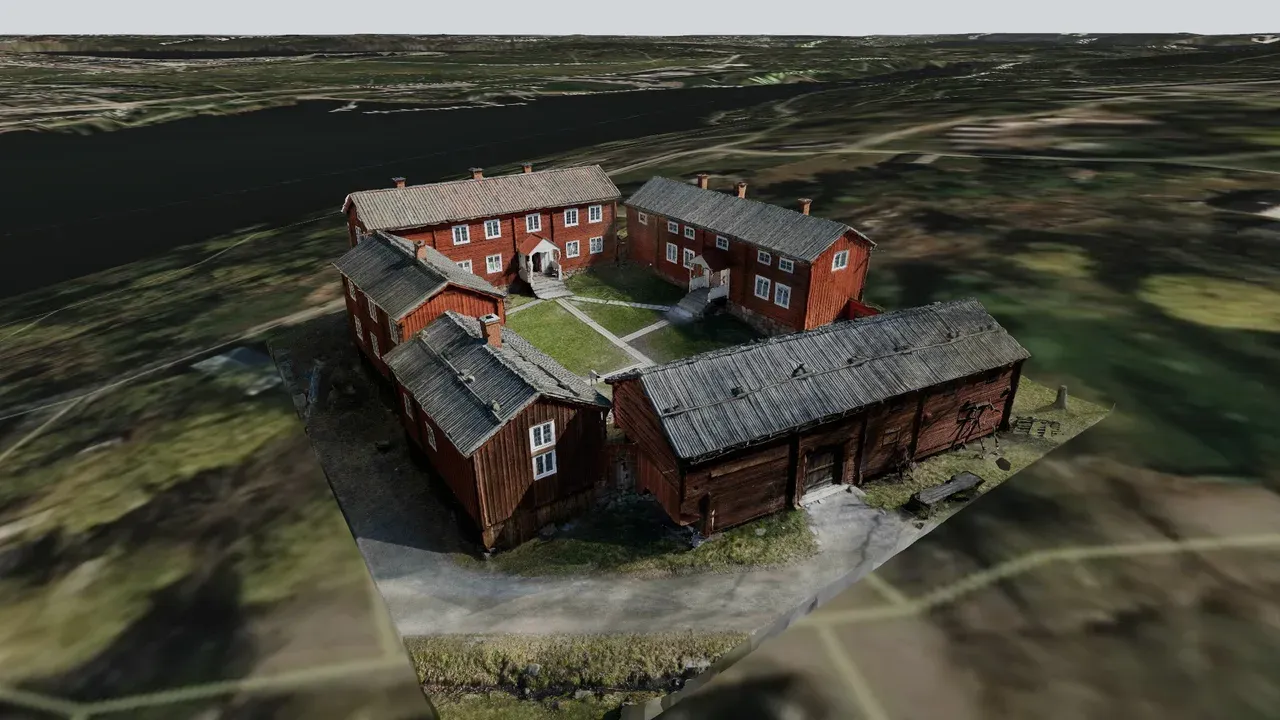
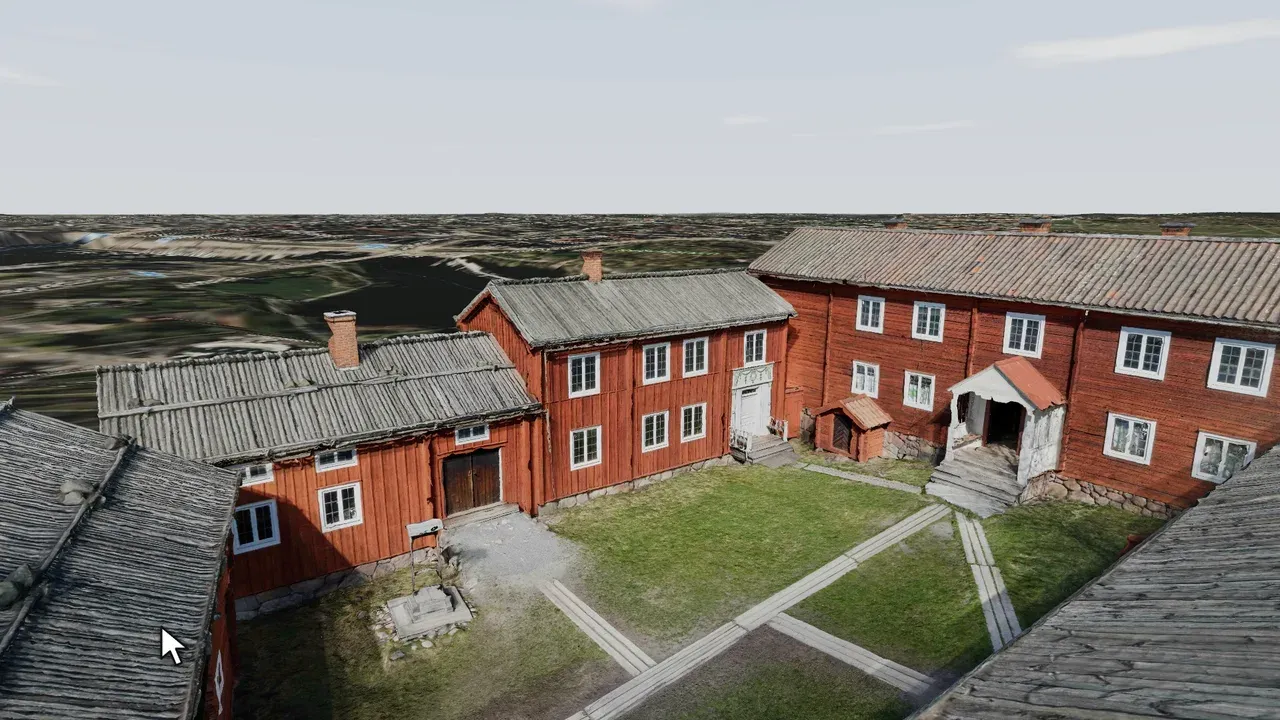
Wander anywhere in Delsbogården and ask "what am I looking at?". The host reads the view, recognises Västerängsstugan from its tag and answers about the building that is really in front of you. Everything with a name can be tapped as well: tap Sängstugan and the question writes itself. The stops are a route, not a cage. Visitors lead, the host follows, and when nothing it knows is in sight, it says so.
"What am I looking at?" The host reads the screen, recognises Västerängsstugan and answers about the house in view.

Live connections to your own records

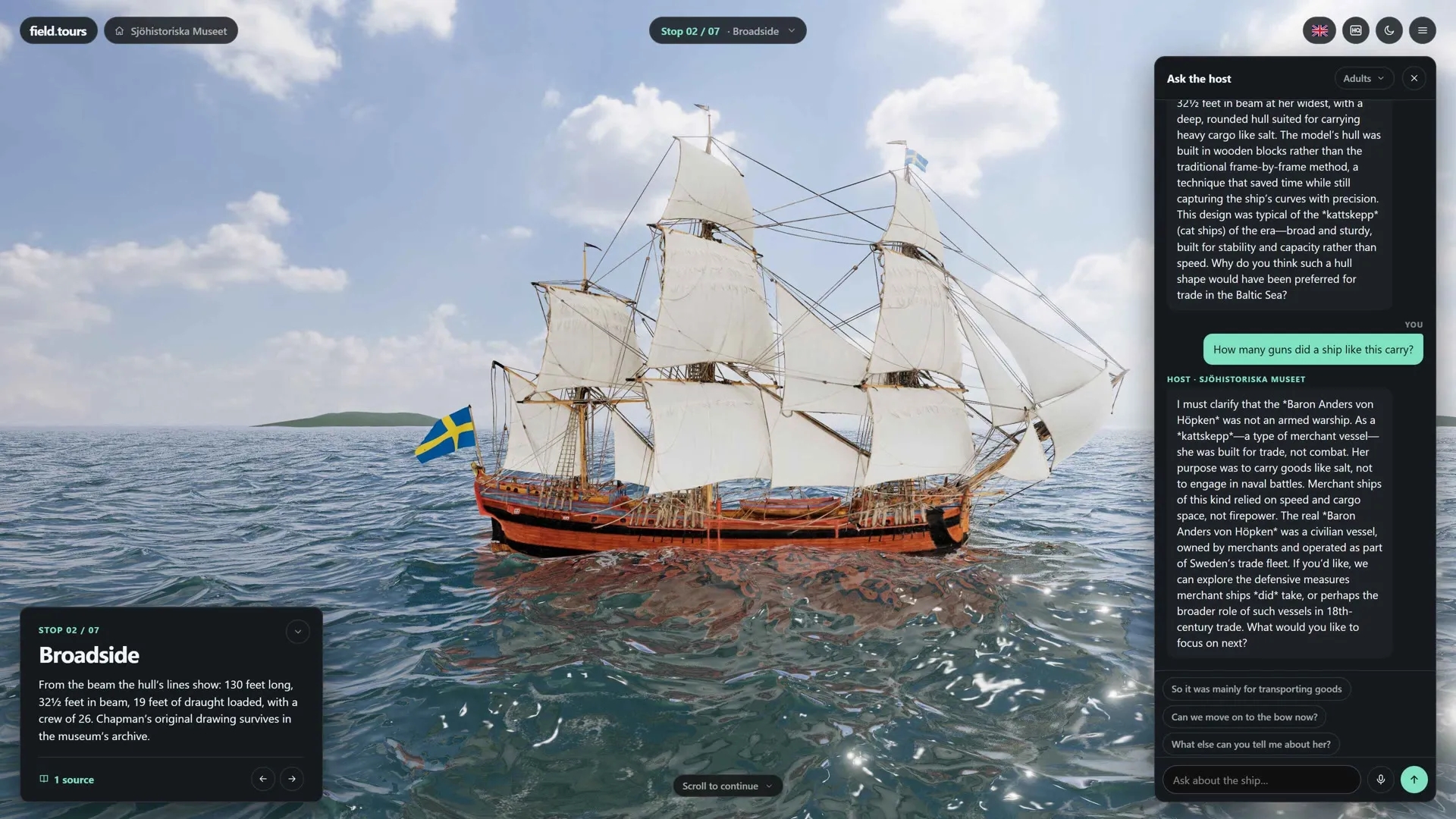
The host does not have to work from static text alone. On Baron Anders von Höpken it is connected to Sjöhistoriska museet's own catalogue on DigitaltMuseum. Ask who the ship is named after and the answer comes from the live record, object S 5780. A correction made at the museum reaches the tour on the next visit. The same connection can go to a collection database, a sensor feed or an operator's live data. That is what makes the engine as useful for a power station as for a museum.
"Who is the ship named after?" The host answers from the museum's live catalogue record on DigitaltMuseum.

Sources, not guesswork

Everything the host says comes from the tour's own sources: the Scandinavian Runic-text Database and the Swedish National Heritage Board for the runestone, Skansen's building histories for the farm, the museum catalogue for the ship. Ask where a fact came from and the host tells you, and every stop shows its sources for you to open and read. The host never fills gaps from its own training. Where the sources disagree, the tour says so. Where they are silent, the host says it does not know. That is what makes it safe for a museum to put its name on.
"Where did you get this info?" On Sálajiegna the host names the study behind the figures, and the stop's references open for reading.

Streamed 3D

A scan of a real place is big. One of our sites is 2.1 GB as delivered and holds 194 million triangles. Opening it in field.tours fetches 12 MB. The engine streams the scan as 3D tiles, sending only the part you are looking at, at the detail your screen can show, and the rest keeps arriving as you move. Visitors never see any of this. They see the finished scene from the first second, on the web, on a touch display and in VR, with nothing to install and nothing left out. Hand us the raw scan, a point cloud, a photogrammetry model or a BIM file and the pipeline turns it into a world that streams.
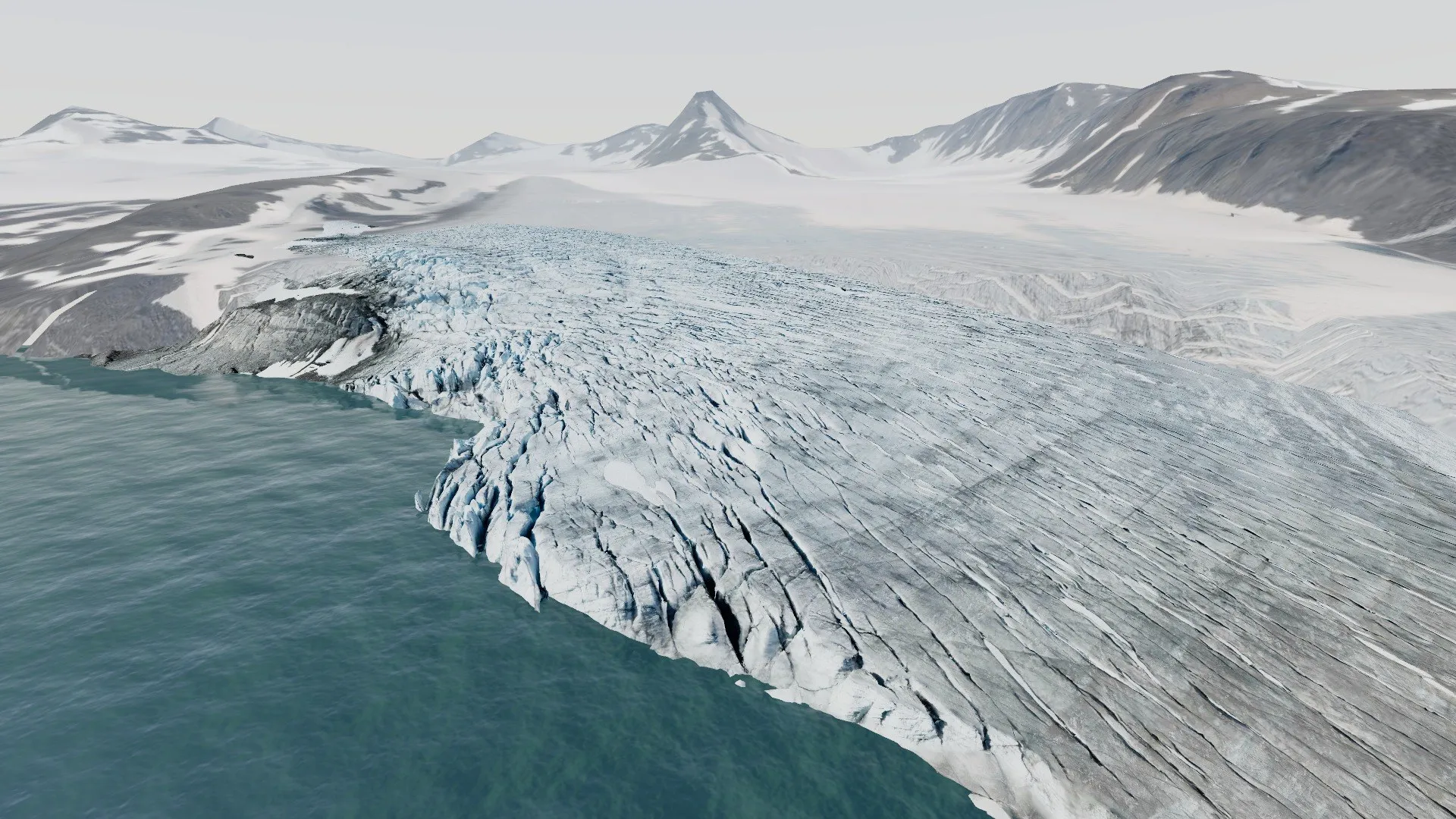
Under the hood: the glacier scan arrives as tiles that sharpen where you look. 12 MB in view, 2.1 GB in total.

Custom stories

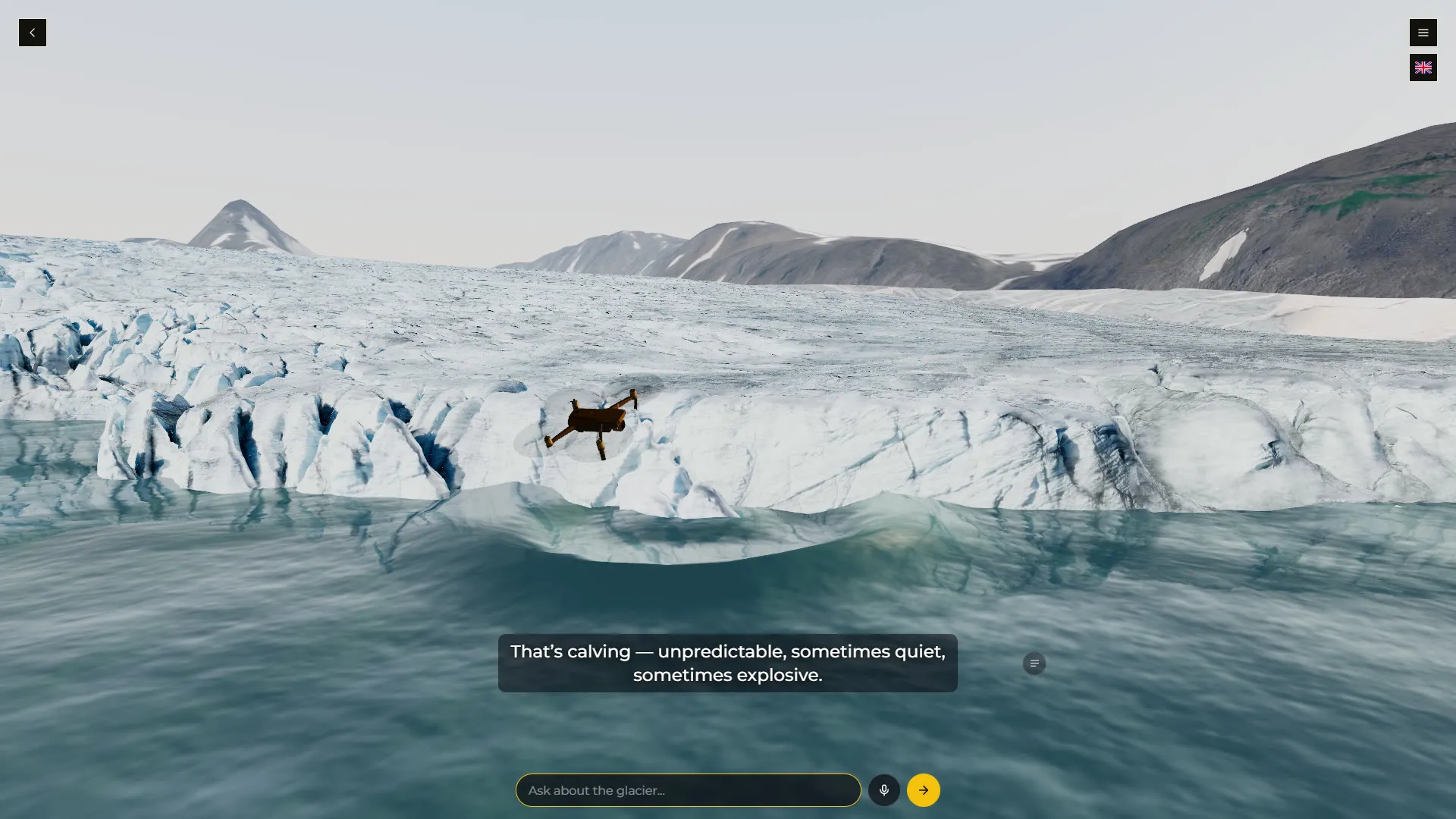
When the story needs more than the place, we write and build it with you on the same engine. Custom stories add animated AI characters with a voice and a story of their own, a farmer, a ranger, a scientist; animation and simulation, a drone that surveys, a boat that lands, ice that falls; and bespoke interaction built for what your story asks of the visitor. Sálajiegna, a glacier front no visitor can approach, is the first one. It lives on exped.earth, our series of interactive science expeditions, and everything in it is field.tours underneath.
See exped.earth →
Sálajiegna on exped.earth: a survey drone, a boat and ice that falls, told over a streamed scan.

Become our pilot partner

Stories in field.tours are content, not code. That is the point: a museum's own staff should be able to change a stop, add a language or correct a source without a developer. A Standard tour is built from your model and your texts, and you manage it yourselves. A Custom story we write and build with you. We are looking for a handful of organisations to test both on a real place and shape what comes next.
Become a pilot partner →

Impact

We are looking for a handful of pilot partners: museums, heritage sites, energy and industrial companies with a place few people get to see. Bring one place and we will show you the tour: a 45-minute walkthrough on your own 3D model if you have one, otherwise on ours, then a scoped pilot.