ICEVR

IVAR Studios

Part of XR4ED, a Horizon Europe project

Ongoing project
Format
Classroom VR with hand tracking
For
Upper-secondary students, ages 15 to 19
Subjects
Geography, Biology, Natural Science, Social Studies
Headsets
Meta Quest 3, Android XR and Pico
Languages
English and Swedish
Science
CHARTER, ECOTIP and FACE-IT, EU-funded Arctic research
First funded by
XR4ED open call (Horizon Europe), 2024–2025
Stage
New version in beta

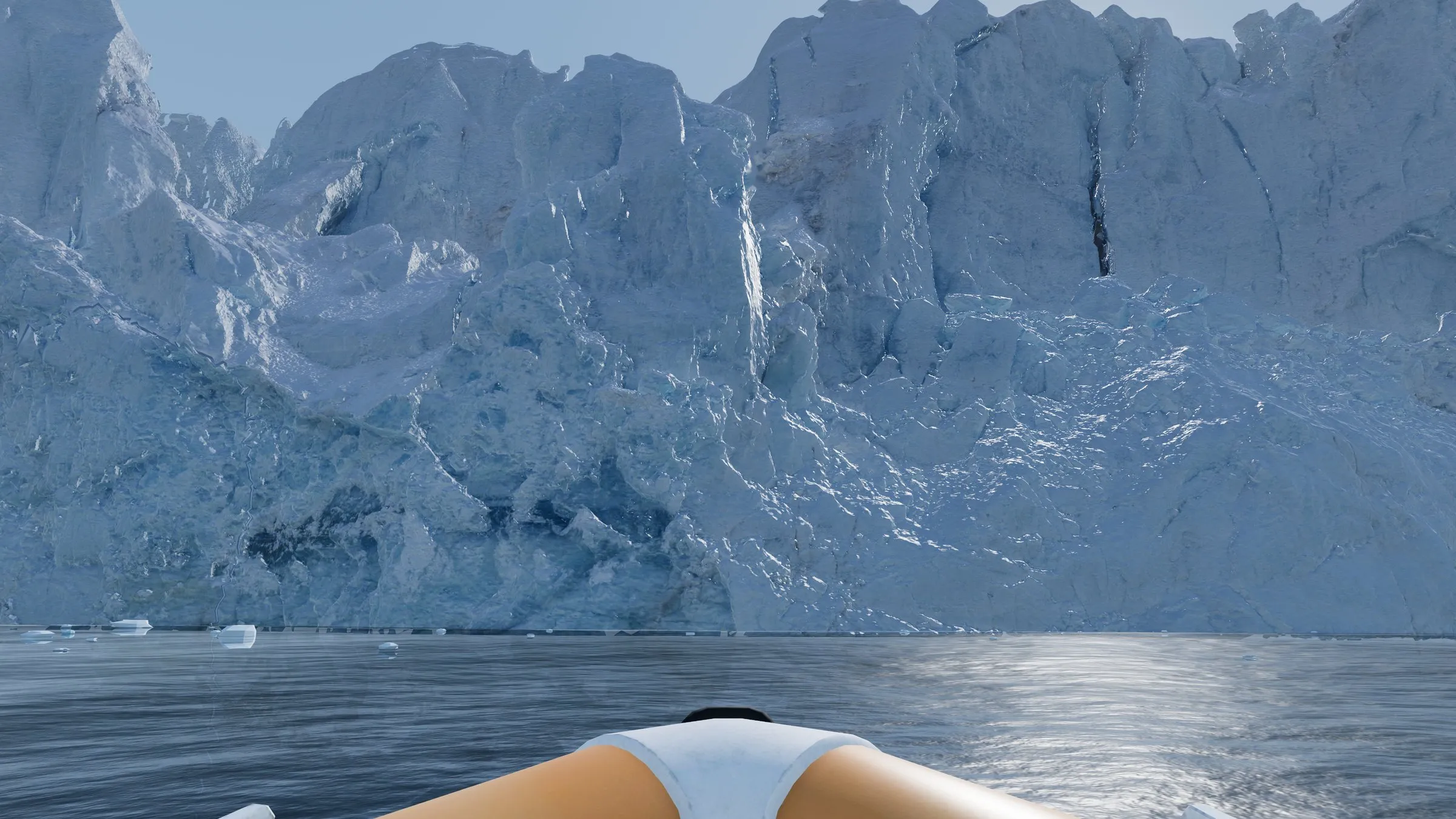
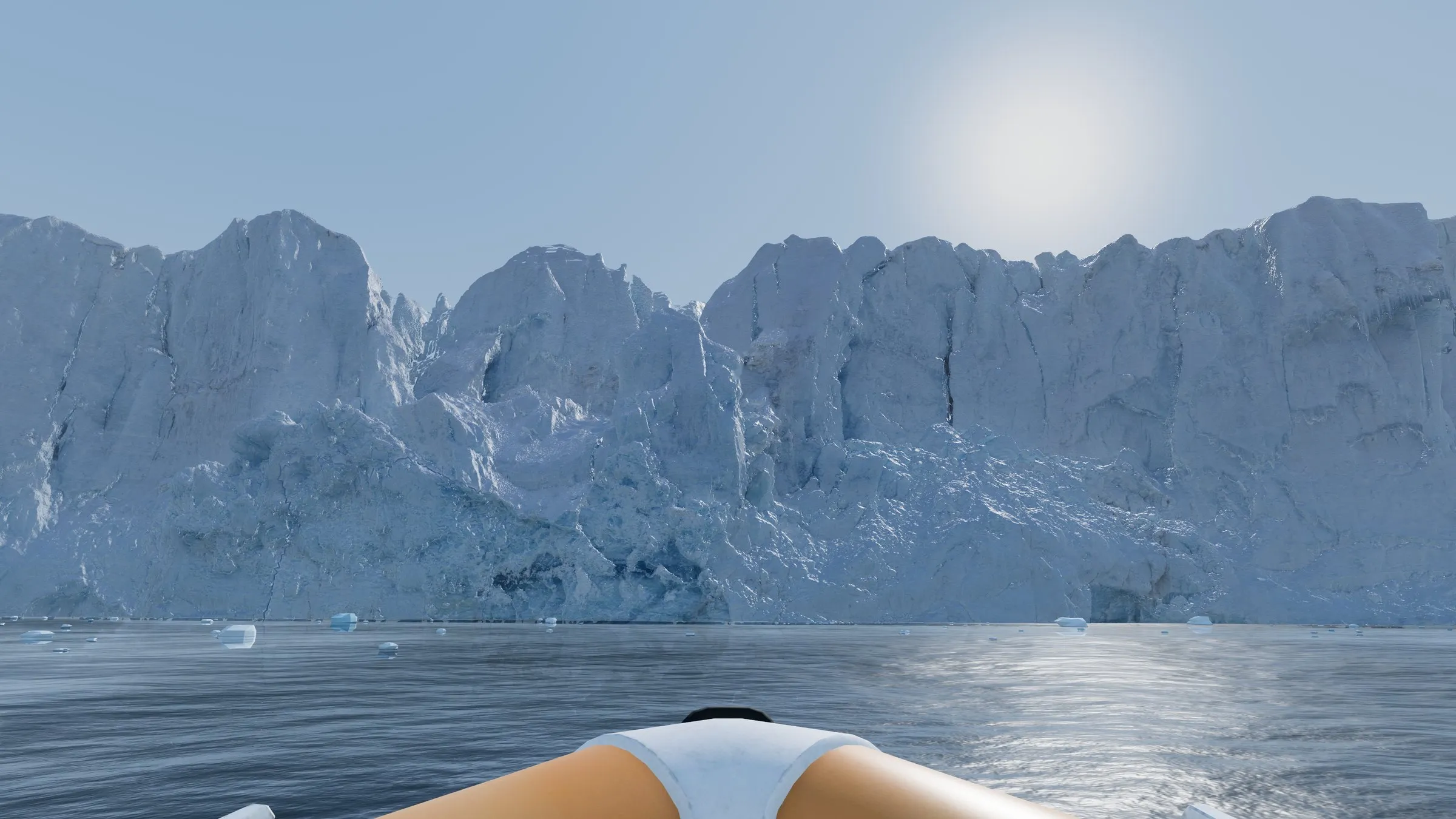
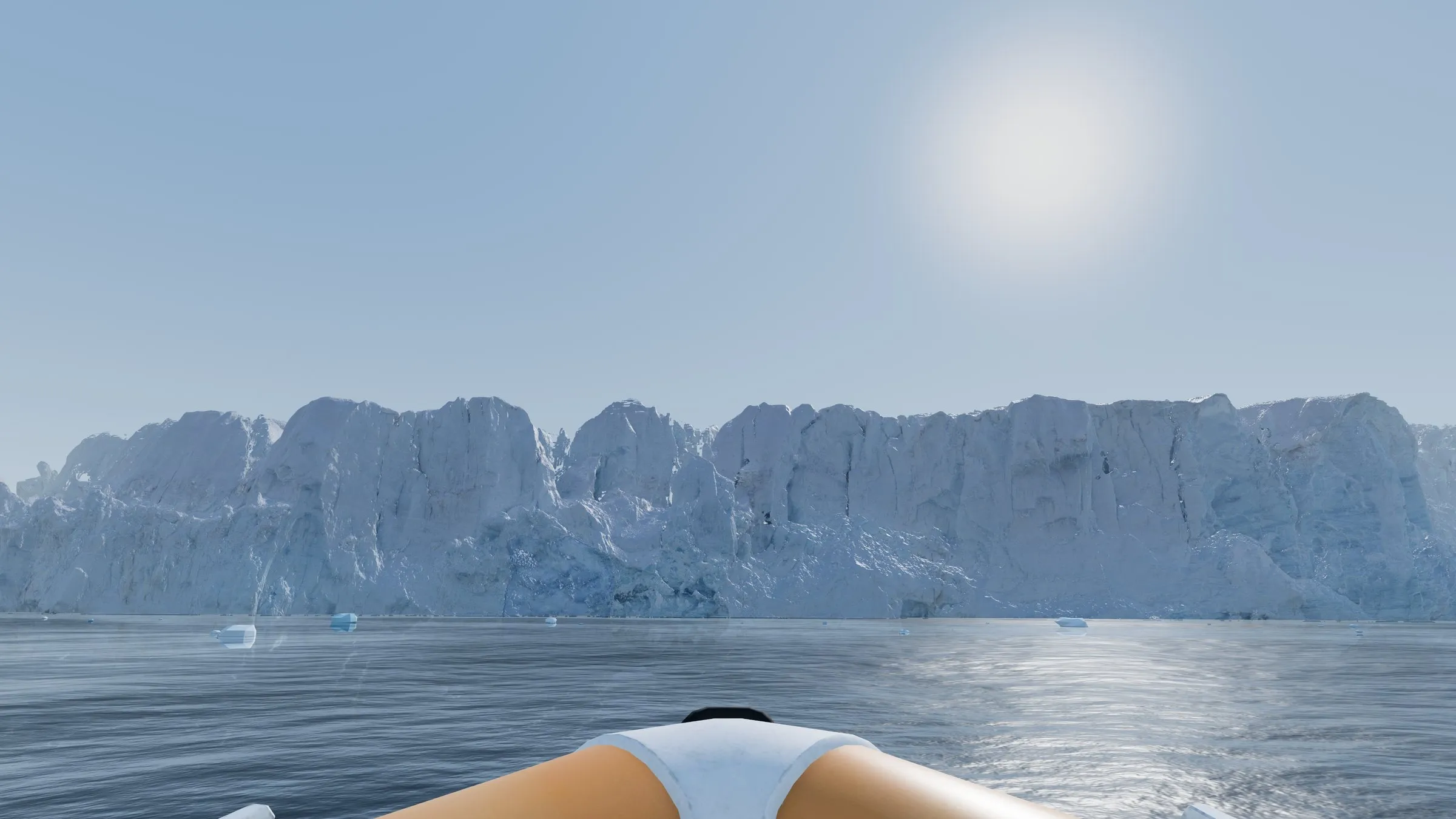
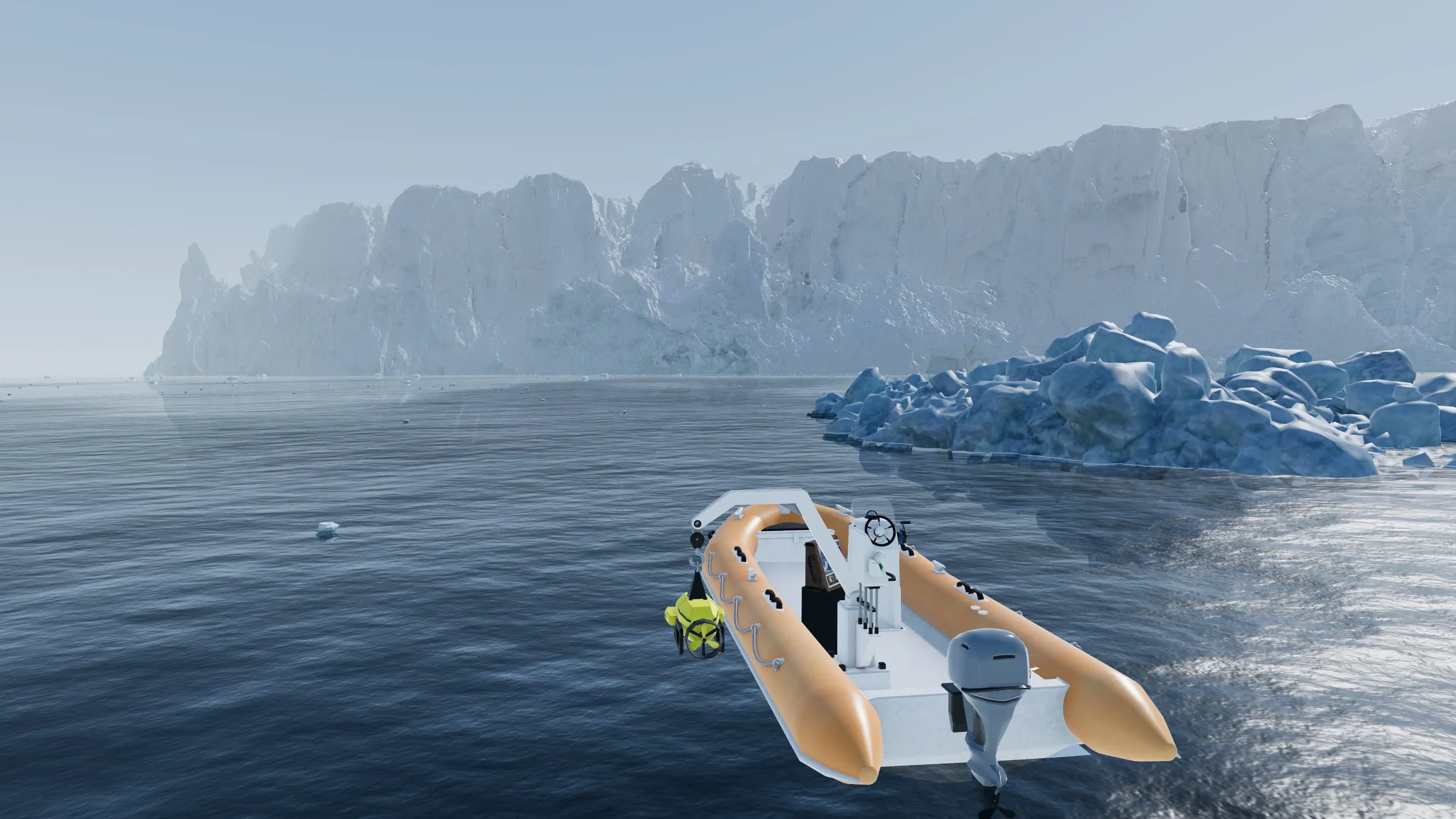
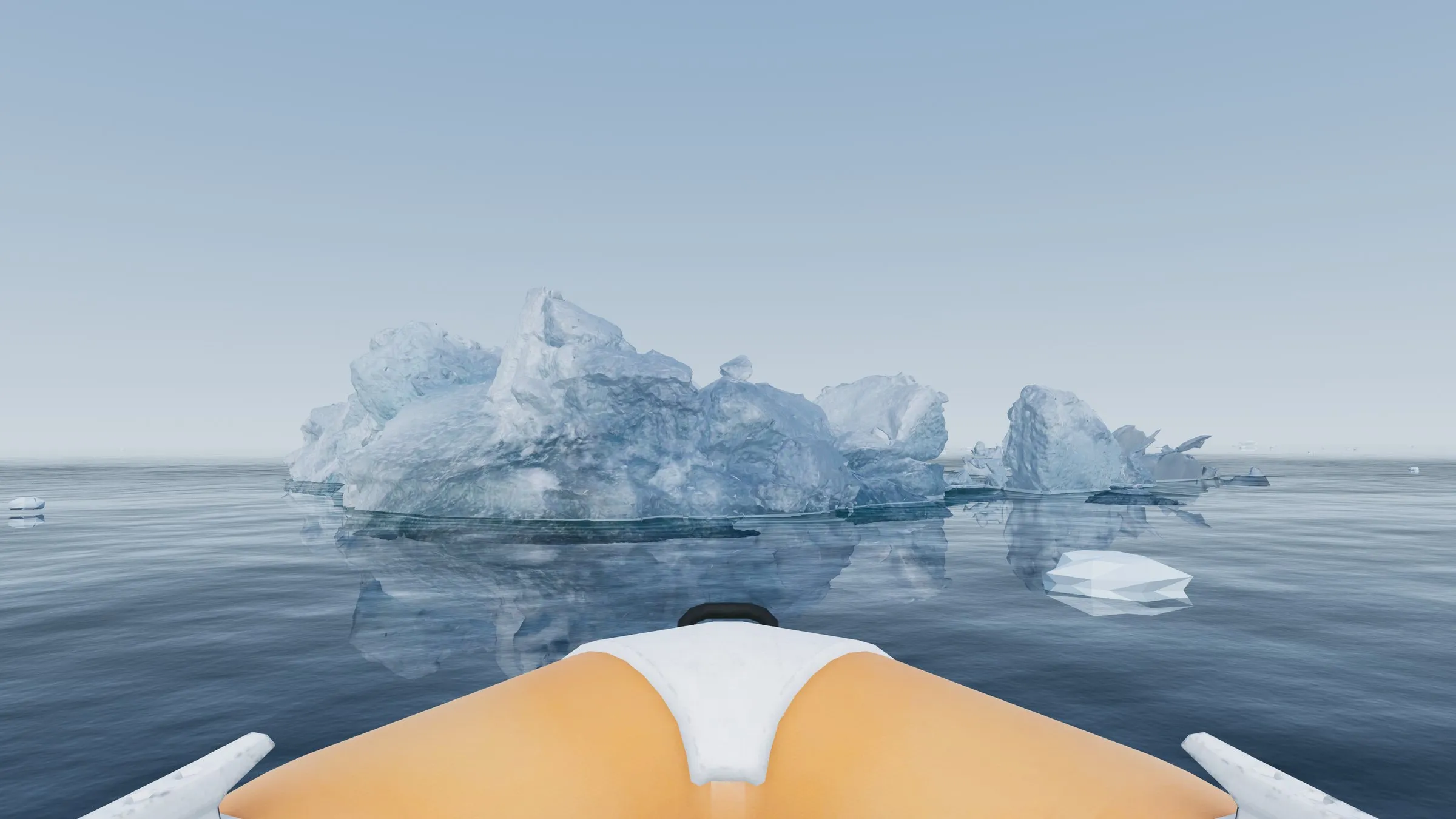
A student stands in a small boat below a glacier in Svalbard. One press on a button and it is the 1990s: the ice wall is closer and the icebergs are taller. One more press shows the same fjord in a warmer future.

ICEVR is a VR experience for the classroom about how the Arctic is changing. Students start in a research base and learn to use a handheld device called P.A.T.C.H. Then they take a boat to a glacier front built from our own 3D scans of Lilliehöökbreen in Svalbard. With the device they move between the past, today and a possible future, and see what happens to the ice, the water and the animals. The first version was made in 2024 and 2025 with funding from XR4ED, a Horizon Europe project. Its story builds on research from three EU-funded Arctic programmes: CHARTER, ECOTIP and FACE-IT. Teachers from five Swedish upper-secondary schools reviewed the prototype. The grant period ended in October 2025. The project did not. We are now rebuilding ICEVR as a standalone app for Meta Quest 3, Android XR and Pico headsets, with a longer story, hands-on experiments and a glacier that calves in front of the boat. The beta is underway, and we are looking for more educators and testers.

Development is partly financed. Educators, funders and research groups can take part.

See how to take part →
ICEVR highlight

ICEVR rests on one idea: change is easier to understand when you can stand in it. One device moves the whole fjord between the past, today and a possible future, and the student compares.

In the research base

ICEVR is built around a hub. The hub is an Arctic research base, and every session starts and ends there. In the base the students get ready. Then they go out: first an introduction in 360° film, then a mission to a glacier. Back in the base, they go deeper at the research stations and with in-depth tasks. New missions can be added in the same way.
How ICEVR is built: the research base and its missionsThe research base is the hub, and every session starts and ends there. In the base the students get ready: they learn to move with their hands only, get the P.A.T.C.H. device with its labels, mission map and time shift, collect the tools and choose a mission. From the base they go out. The introduction is a film in 360 degrees. The mission goes to the glacier front at Lilliehöökbreen in Svalbard: by boat between nine 3D-scanned icebergs, with a drone, an underwater robot and water samples, and the glacier calves. More missions can be added, and new chapters can carry new research. After a mission the students come back to the hub and go deeper, at research stations with hands-on experiments and with in-depth tasks. Past, Present and Future recur in the base and at the glacier. The hubThe research baseEvery session starts and ends here.Get readyLearn to move, with your hands onlyP.A.T.C.H.: labels, mission map,time shiftCollect the tools and choose amissionGo deeperResearch stations: hands-onexperimentsIn-depth tasksPast · Present · Future out on a mission back to the hub IntroductionA 360° filmA film in 360° opens the story MissionThe glacier frontLilliehöökbreen, SvalbardBy boat between nine 3D-scannedicebergsDrone, underwater robot, watersamplesThe glacier calvesPast · Present · Future NextMore missionsNew chapters can carry new research
How ICEVR is built: one hub, and missions that start and end there.
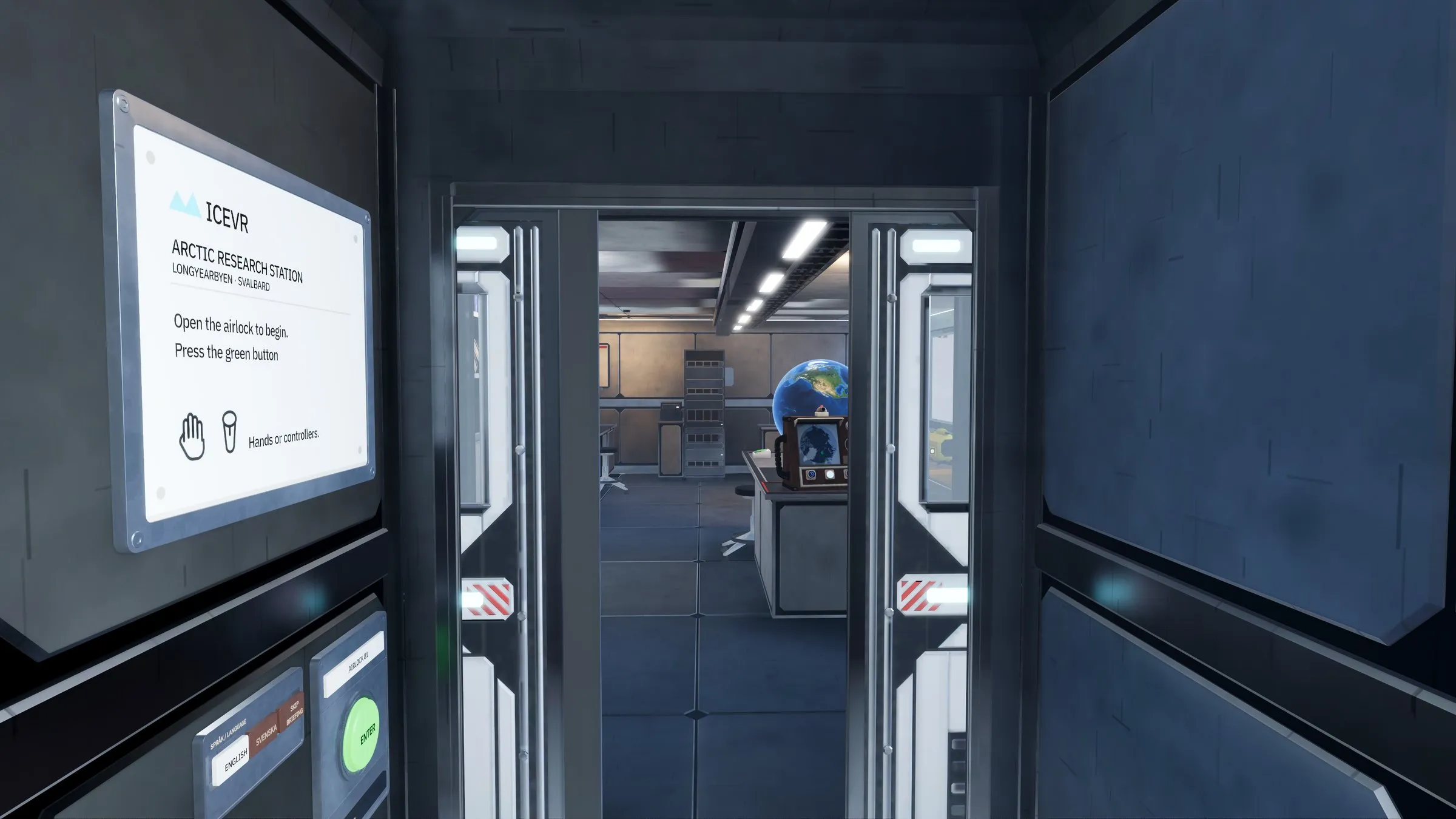
In the base, a guide on the radio, Dr. Astrid Dahl, teaches the first steps. To move, the student looks at a marker on the floor and points at it. The headset follows the student's own hands, so there are no controllers to learn.
The airlock opens onto the research base. Every session starts here and ends here.
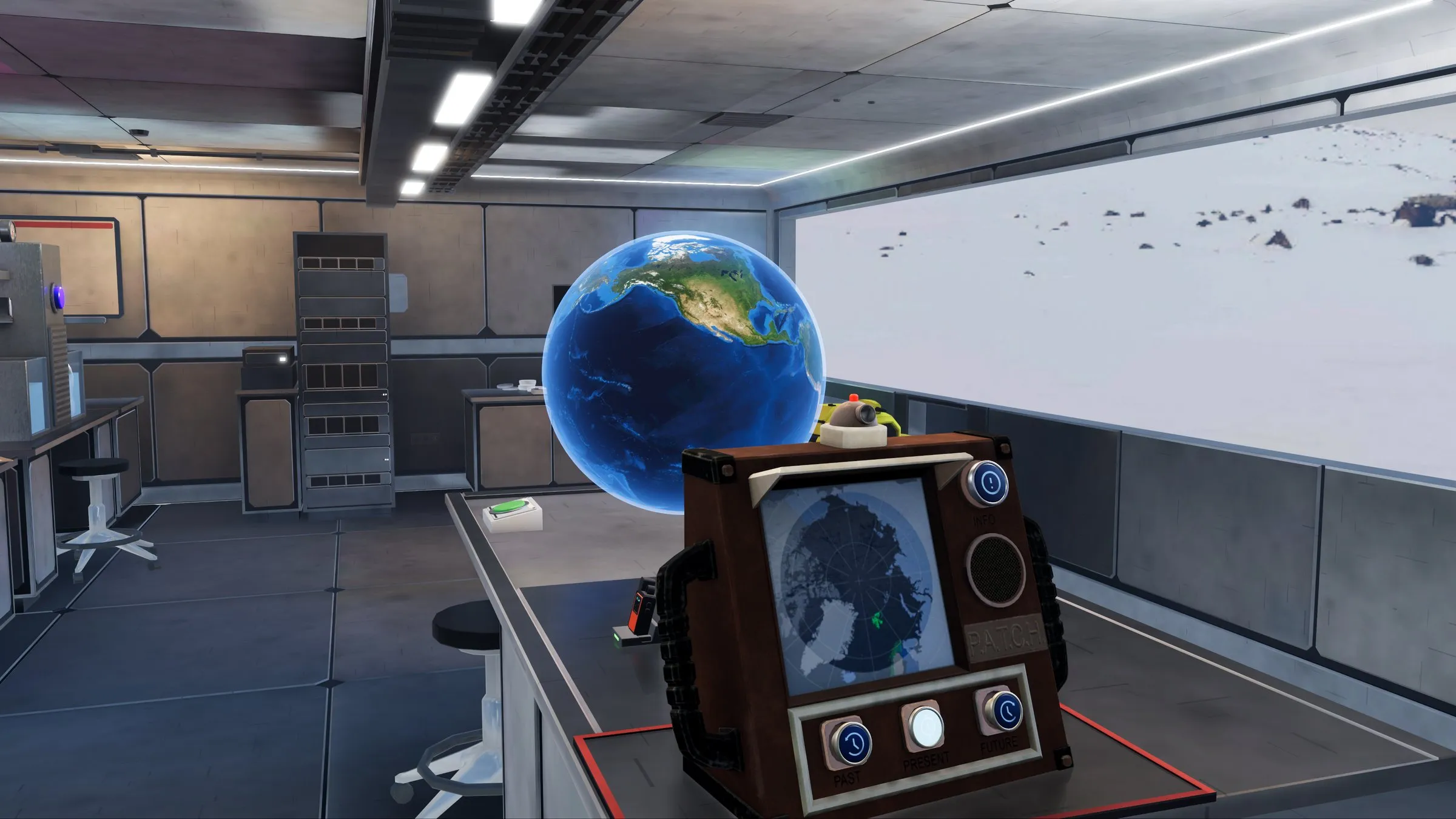
Then the student meets P.A.T.C.H., a handheld device that stays with them for the whole experience. It puts labels over the equipment in the room, it holds the mission map, and it shifts time. One press, and the window fills with ice: a few decades ago, the glacier was so large that the base would have been inside it. One more press, and it is a possible future.
The time shift, seen through the window of the base: today, a few decades ago, when this place lay inside the glacier, and a possible future.
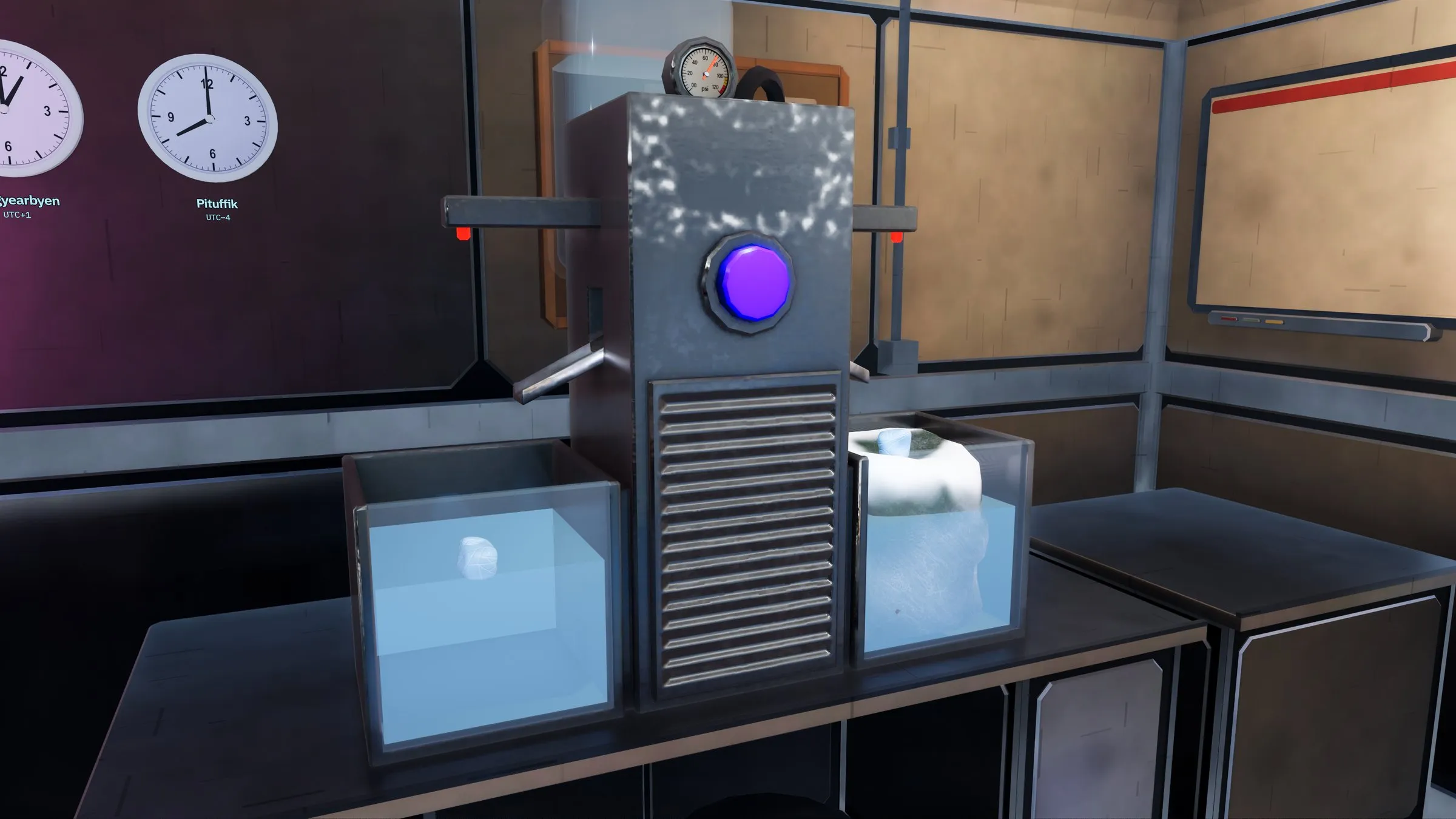
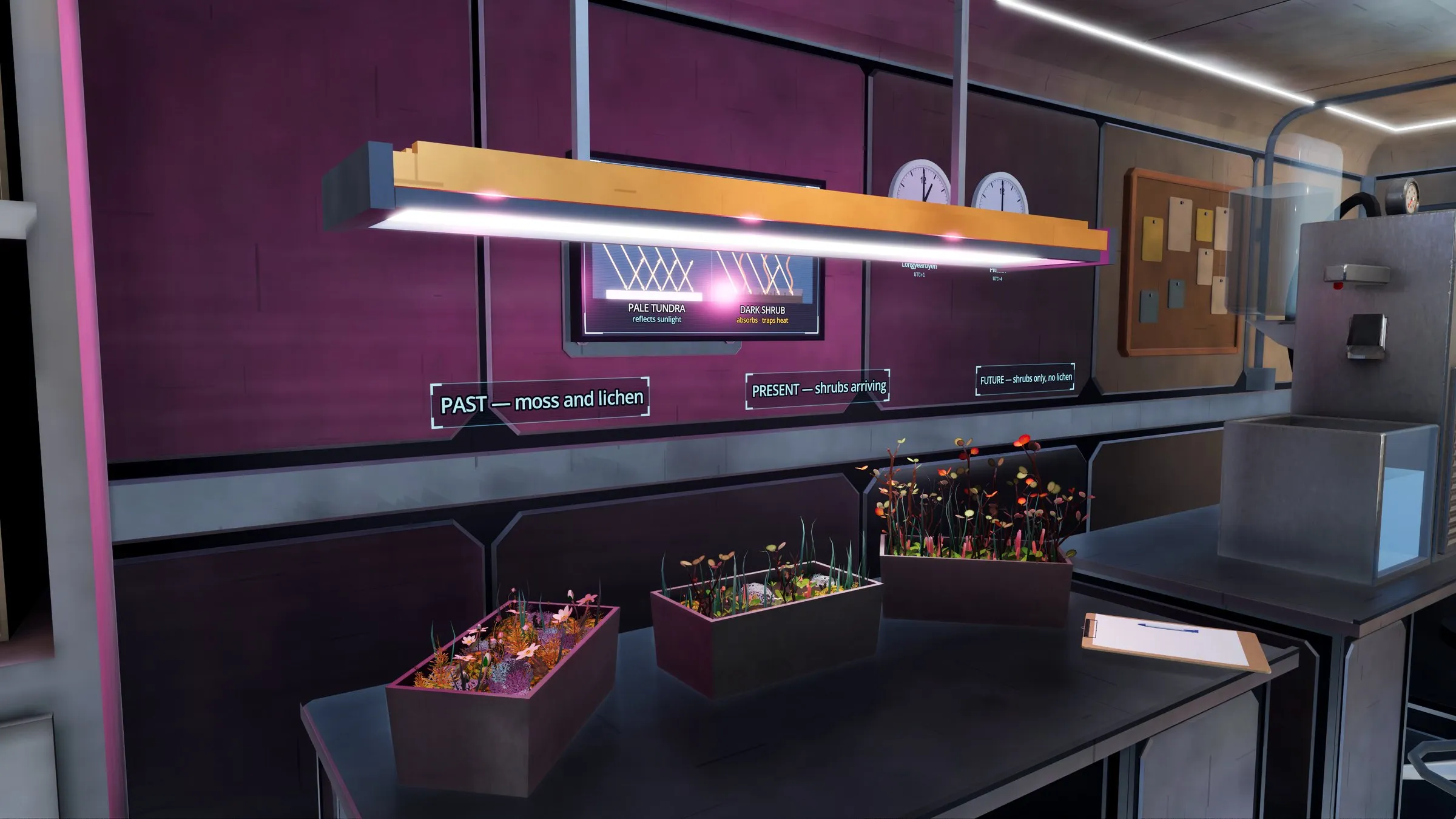
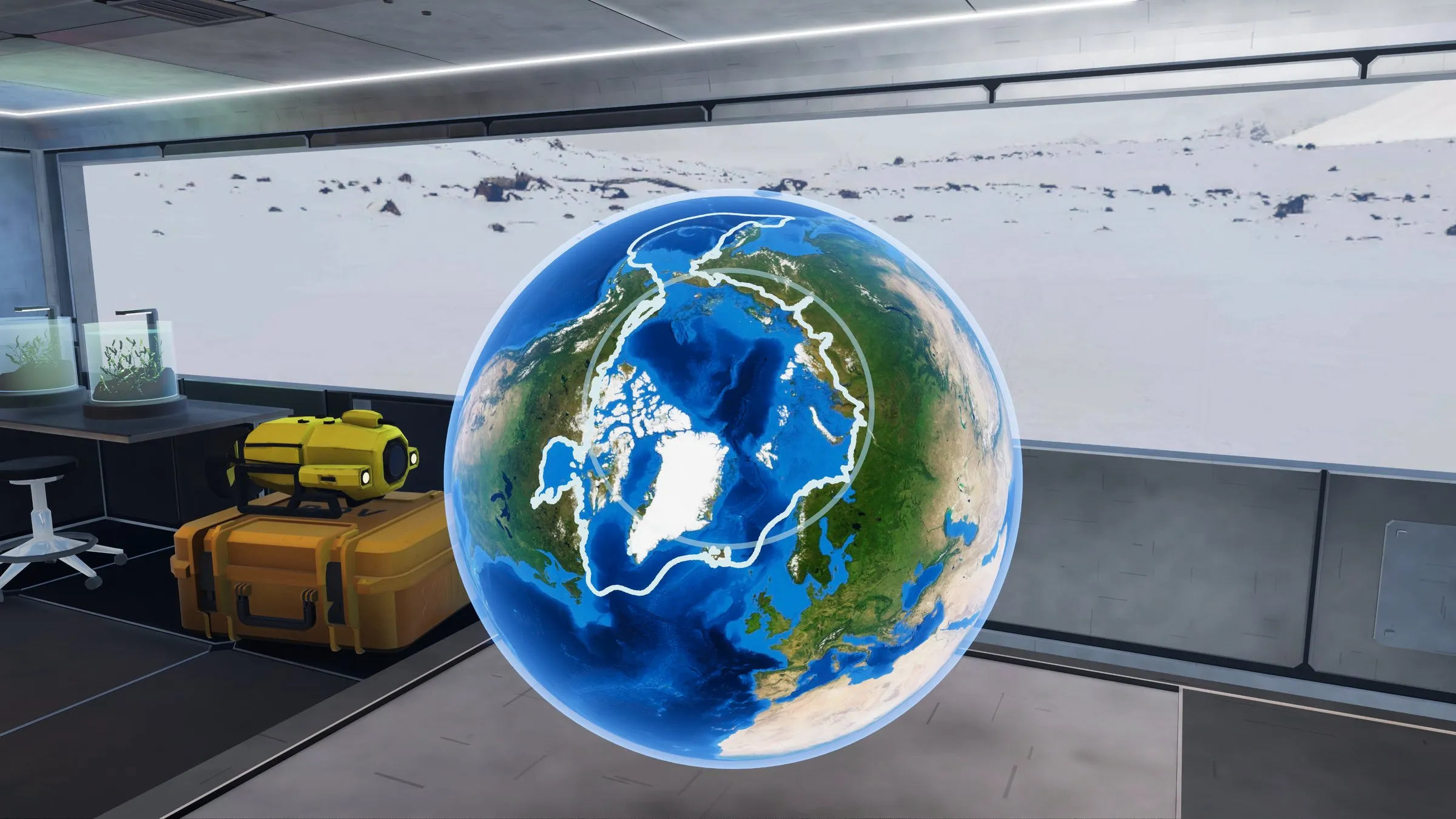
Around the room are four research stations, each with an experiment. Two tanks compare clear seawater with water full of glacier sediment, and show what the loss of light does to kelp. At the Glacier Gauge, floating ice and land ice melt side by side, and the student sees which one raises the sea. In a row of pots, shrubs take over from tundra plants, and the darker ground takes up more heat. A globe shows two ways to draw the edge of the Arctic: the Arctic Circle, and the line where July is no warmer than 10 °C. The second line is moving north.
The marine tanks. The app lights up one tank at a time and labels it: clear water in one, glacier sediment in the other.
Before leaving, the student collects three tools: an underwater robot, a drone and a sample dish. The mission map then shows the way to the glacier.

At the glacier front

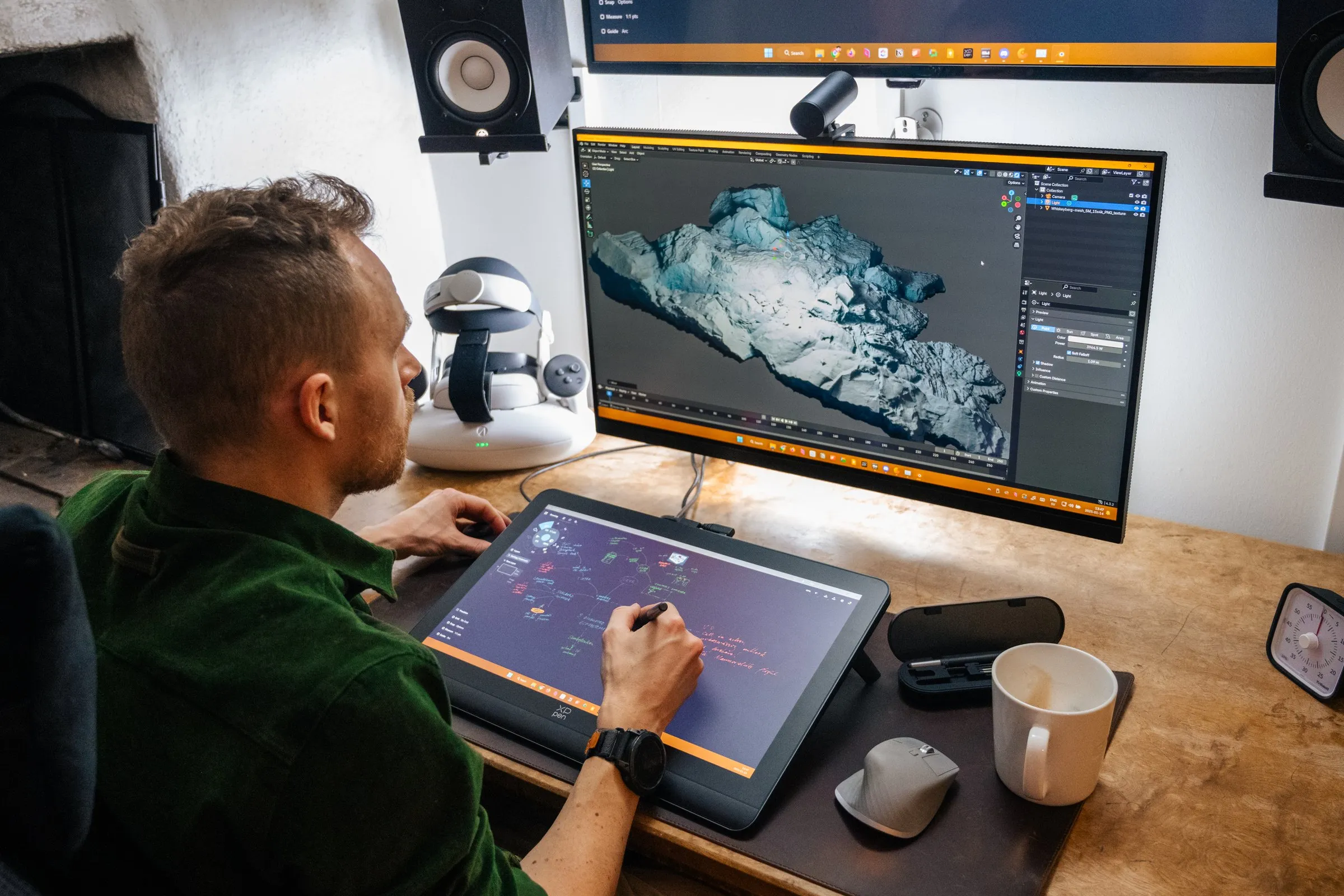
The mission to the glacier, Glacial Wall, takes place on the water. The student starts the engine of a small boat and steers between nine icebergs towards the front of Lilliehöökbreen, a glacier in Svalbard. The glacier front and the icebergs are 3D scans. We captured them in Svalbard in 2023, on the same expedition as our scans for Netflix's Avatar: The Last Airbender. The ice in the headset has the shape of real ice.
One of the nine icebergs, taken apart: the 3D mesh from the scan, its surface, and the texture from our photographs.
Cleaning up the 3D scan of an iceberg for ICEVR.
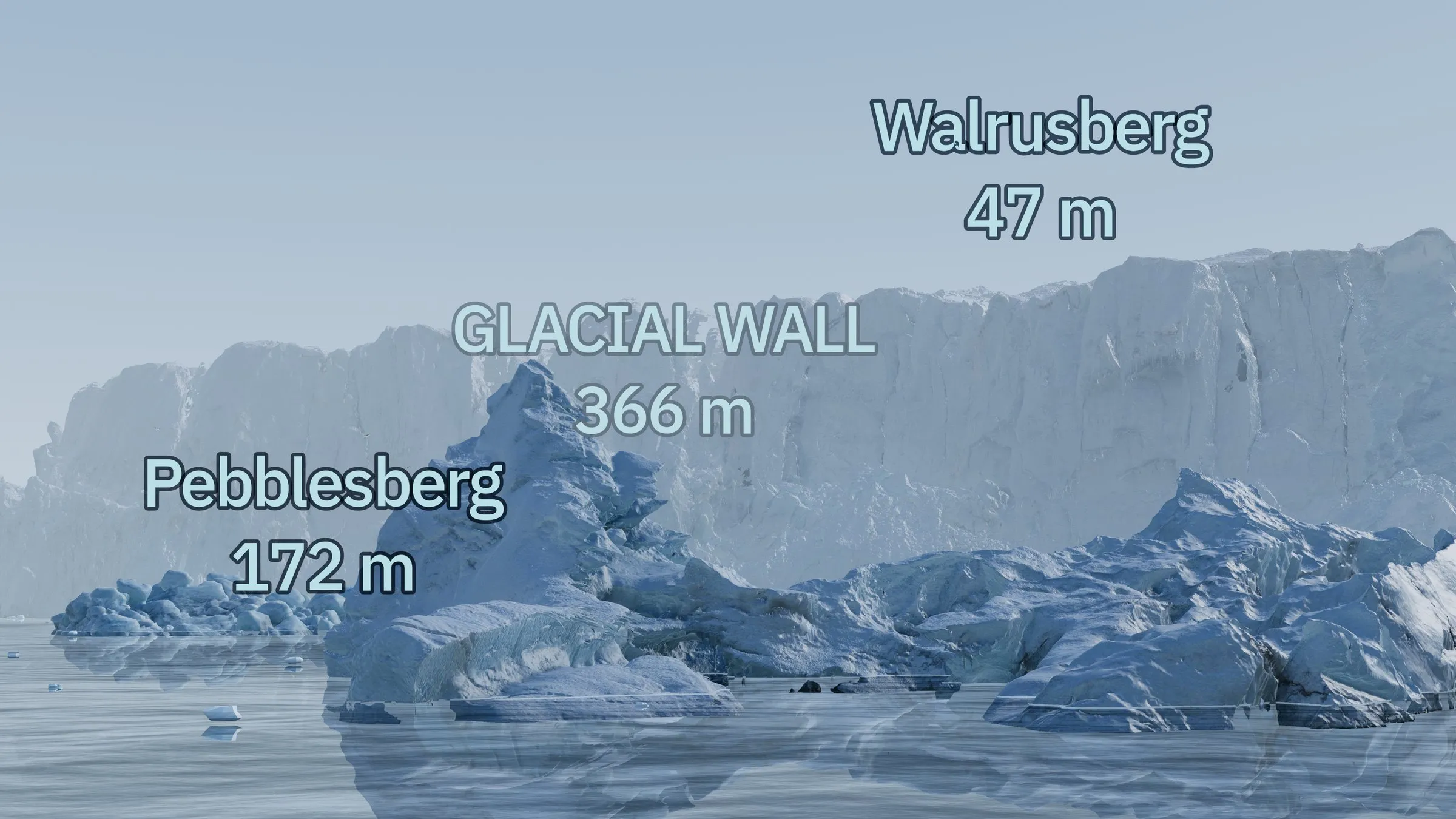
At the glacier, the work starts. The drone flies out and labels each iceberg and the ice wall. A crane lowers the underwater robot, and a screen on board shows what it sees. The student takes two water samples, one in the 1990s and one today. Then a block of ice breaks off the wall. It falls, the spray rises, and the wave rocks the boat.
The crane lowers the underwater robot over the side, in front of the ice wall.
The glacier calves in front of the boat.
P.A.T.C.H. is on board the whole time, and one press changes the whole fjord. In the 1990s the ice wall stands close and the icebergs are tall. Today the wall has pulled back. In the future it is far away. The animals change too, and so does the view under the water.
The glacier front in the 1990s, seen from the boatThe same view todayThe same view in a possible future
Choose a period

Polar bears, ringed and bearded seals, and a flock of little auks. The ice wall stands close.

One bearded seal, one ringed seal, and gulls by the glacier. The wall has pulled back.

Harbor seals and gulls. The animals that need the ice are gone, and the wall is far away.
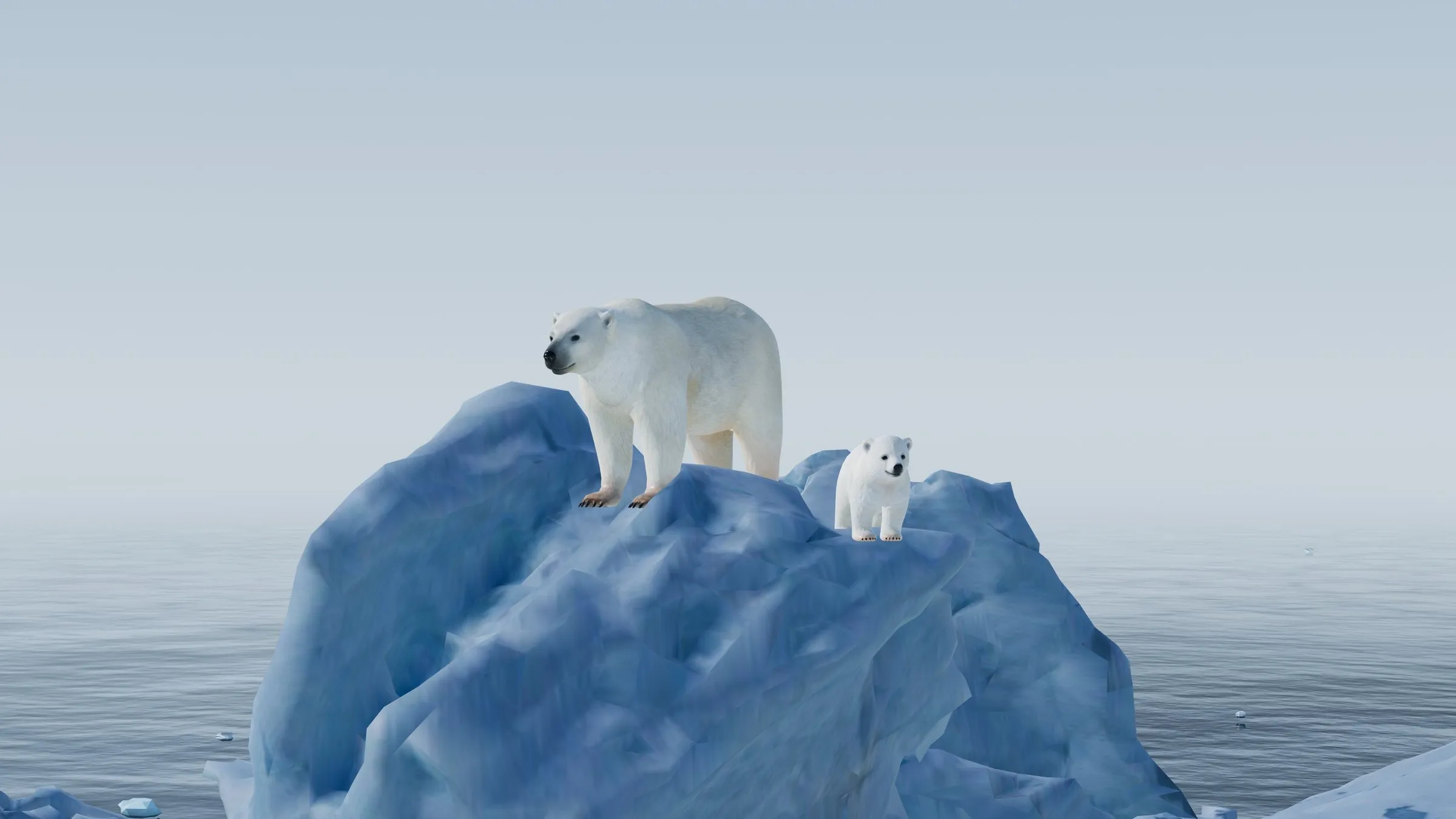
One camera on the boat, three periods. In the headset, the student makes this switch with the P.A.T.C.H. device.

The science

The first version of ICEVR began with interviews. We talked to scientists in three EU-funded research programmes: CHARTER, which studies how life on land in the Arctic is changing, ECOTIP, which studies tipping points in Arctic seas, and FACE-IT, which studies the future of Arctic fjords and coasts. Their reports are long and written for other scientists. We turned the findings into scenes that a 15-year-old can follow, and the scientists checked what we had made of their work. Nobody paid them for this. They helped because they want their results to reach the public. Where a scientist did not have the time to check a part of the story, we left that part out.
From research to classroomHow the first version was made: research papers and datasets from CHARTER, ECOTIP and FACE-IT became a research brief, then a script checked by the scientists, then the scene, narration and interaction, and finally a classroom headset. Anything the scientists could not verify was left out. Research papersand datasets CHARTER · ECOTIP · FACE-IT Research brief Script, checkedby the scientists Anything the scientists couldnot verify was left out. Scene, narrationand interaction Classroomheadset
How the first version was made, from research paper to headset.
What remains is a chain of cause and effect that students can follow with their own eyes. The glacier retreats. Meltwater carries sediment into the fjord, and the water gets darker. Kelp gets less light. Warmer water lets species from the south move in, and Arctic specialists lose ground.

What teachers told us

In May and June 2025 we held guided online sessions with teachers and ICT educators from five Swedish upper-secondary schools. They saw a walkthrough of the prototype and its learning goals and discussed it with us. Afterwards, five of them answered a form.

Statement Average of 5 answers, 1 to 10

ICEVR is an interesting way to work with climate-related questions.
9.6/ 10
I see potential in using this kind of VR material in my teaching.
10.0/ 10
ICEVR could help students engage more with the subject.
9.8/ 10
ICEVR seems possible to connect to central parts of the curriculum.
10.0/ 10
I would like to use this kind of digital experience in more subjects.
10.0/ 10

Five answers. With a group this small, the averages are a first reading and not a measurement. The teachers saw a walkthrough on a shared screen, not a class in headsets.

“ICEVR is perceived as a highly engaging and promising VR tool for teaching climate-related issues, with clear potential for use across subjects like Geography, Biology, and Social Studies.”

Mogens Laurisen

Edtech Flen

  • “The strength of VR is that it can show phenomena that would otherwise take a visit to a place nobody really has access to.”

    Educator, Swedish upper-secondary school, 2025
  • “To shed light on questions both at large, for example how a rise in temperature affects the climate of the whole planet, and in detail in one country. To simulate processes that would otherwise take a long time, and see different scenarios depending on what is done.”

    Educator, Swedish upper-secondary school, 2025
  • “Being able to visualise phenomena and reactions that are hard to grasp, in a safe, lab-like setting.”

    Educator, Swedish upper-secondary school, 2025

What they asked for, and what we did

  • A way to move in time and watch change happen

    This request became P.A.T.C.H. and its time shift, which now runs through the base and the glacier mission.

  • Lab exercises that explain what the student sees

    The research base now has four experiments that the student runs by hand.

  • Short sessions, and a base camp to return to

    Every chapter starts and ends in the research base.

  • An app that is easy to get onto the school's headsets

    The first version ran through a browser on a PC. The new version is an app that runs in the headset by itself.

From grant to product

XR4ED funded the first version. Teachers reviewed it, and it was delivered on the XR4ED platform. Since then we have rebuilt it as a standalone app.

  1. Oct 2024

    XR4ED open call

    Funded through the Horizon Europe project XR4ED, in its Call for Developers.

  2. May–Jun 2025

    Teachers review the prototype

    Guided sessions with teachers from five Swedish upper-secondary schools.

  3. Oct 2025

    Published on the XR4ED platform

    The first version is delivered and the grant period ends.

  4. 2026 Now

    Rebuilt as a standalone app

    A new version for Meta Quest 3, Android XR and Pico headsets, now in beta. Development is partly financed.

  5. Next

    Public release

    Planned after the beta.

The new version
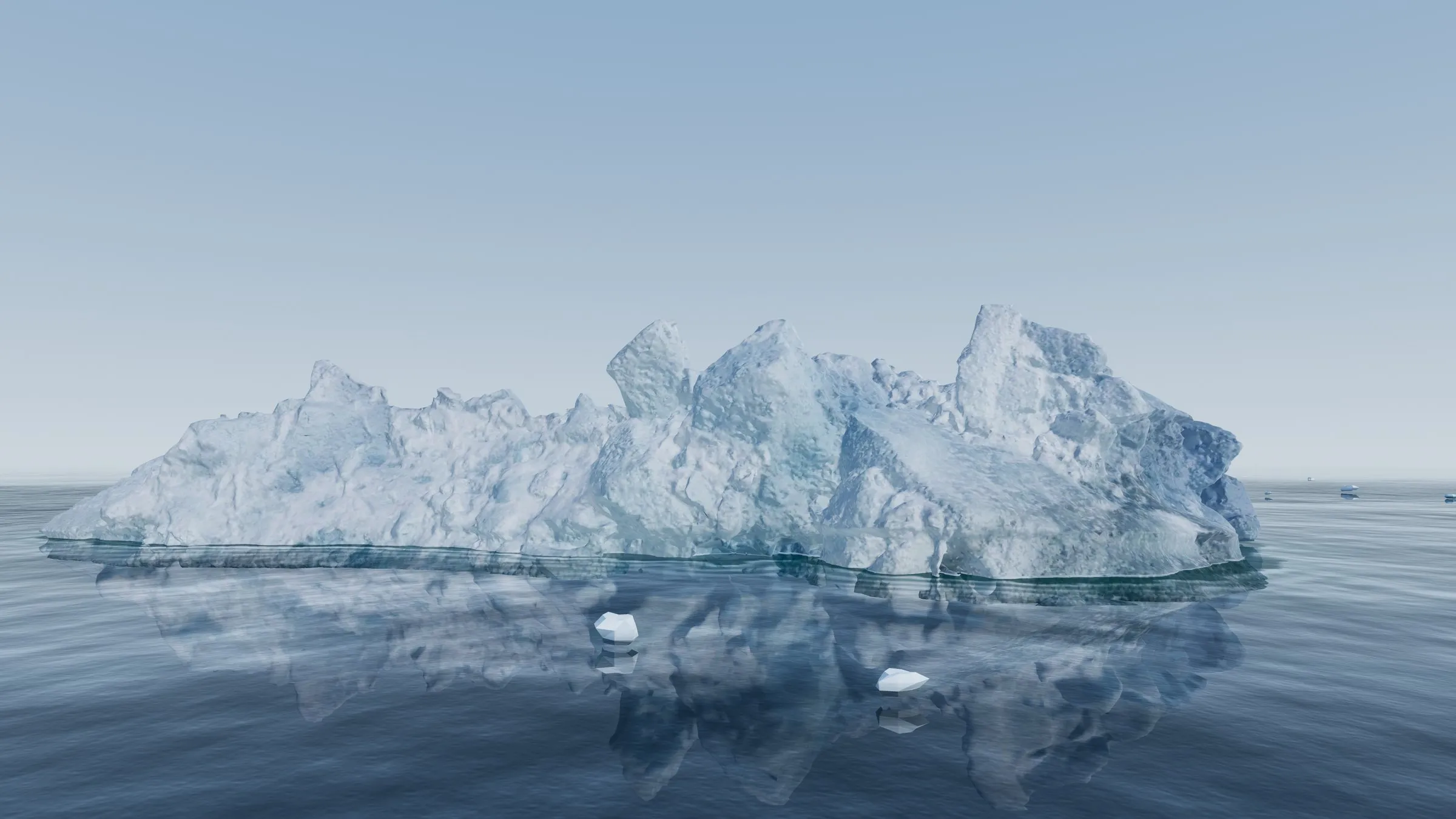
The grant ended with the first version delivered and published on the XR4ED platform. We kept going. In 2026 we rebuilt ICEVR from the ground up. The ice is the biggest change. The icebergs and the glacier front are rebuilt from the full 3D scans, with far more detail than before.
One of the icebergs in the new version, rebuilt from the full scan.
The glacier chapter has grown from a boat ride into a field trip. The student now drives the boat, sends up the drone, lowers the underwater robot, takes water samples and sees the glacier calve. The narration at the glacier has grown from 12 lines to 37. Seven animals move through the scene: a polar bear and a cub, three kinds of seal, little auks and gulls. The research base has a new globe, and its experiments have been rebuilt. The app also takes care of itself in a classroom. If a chapter fails to load, the student lands back in the base, and the story waits while the headset's menu is open.
Along the benches of the research base, from the greening pots to the Glacier Gauge.
ICEVR is not finished. More content is on the way, and the beta needs more educators and testers. See how educators, funders and research groups can take part.

Take part

Development is partly financed. We are looking for partners in three places.

  • For educators and testers

    We are looking for more educators and testers for the beta. Upper-secondary teachers in Geography, Biology, Natural Science and Social Studies are especially welcome.

    Ask about the beta →

  • For funders and co-producers

    The EU financed the first version. The new version needs funding and co-production partners for its release and for new chapters.

    Contact producer Fredrik Edström →

  • For research groups

    ICEVR is built in chapters, and a new chapter can carry new research. If your results should reach classrooms, we can build them in, or join your proposal as the communication partner.

    How we work with researchers →

Credits

  • Martin Edström - Director
  • Fredrik Edström - Producer
  • CHARTER, ECOTIP and FACE-IT - EU-funded research programmes whose scientists advised the first version